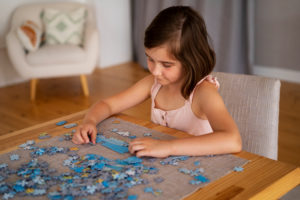
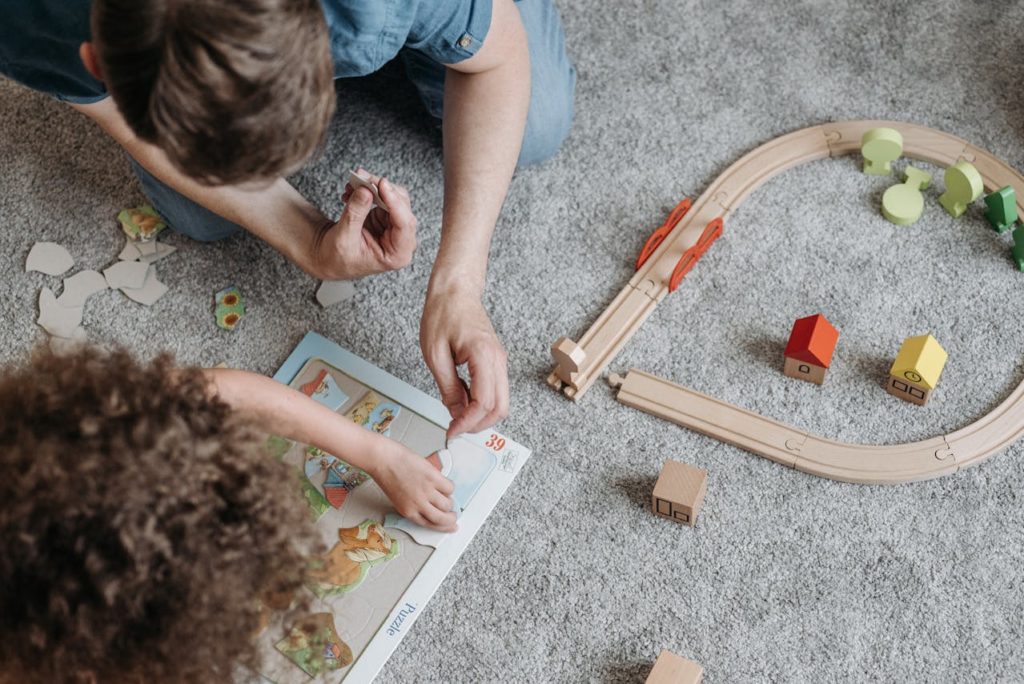
Playing with puzzles may seem like a simple pastime, but it is, in fact, a powerful tool for Cognitive Development. Whether it’s a colourful picture puzzle for toddlers or a complex brain-teaser for older kids, each piece contributes to the formation of essential skills that shape a child’s way of thinking, learning, and interacting with the world.
Building memory and attention
When children repeatedly look at pieces to remember where they fit, they train their short-term and long-term memory. The process also strengthens attention span and concentration — vital for school readiness and early development. Finishing a puzzle requires focus, observation, and persistence, helping kids learn how to complete tasks without giving up.
How puzzles help develop problem-solving skills
Each puzzle is a mini challenge that encourages children to think critically and strategically. They analyse shapes, colors, and patterns to find logical connections — a skill that transfers directly to maths, reading, and everyday problem-solving. Through trial and error, kids gain confidence and flexibility in thinking, important parts of develop cognitive skills training.
Fine motor skills and hand-eye coordination
Wondering how to develop fine motor skills in young children? Puzzles are one of the most effective ways. Picking up, rotating, and placing puzzle pieces strengthens the small muscles in the fingers and hands, improving precision and coordination. These same skills are later used for writing, drawing, and using tools.
Developing focus and patience through calm play
Puzzles naturally slow down the pace of play and teach children to think before they act. Unlike fast-moving games, they reward focus and patience rather than speed. This calm, mindful interaction allows the brain to process information more efficiently and strengthens neural connections responsible for concentration and self-regulation. Over time, children learn that persistence and attention to detail bring satisfying results — a lesson valuable far beyond the game itself.
Spatial awareness and visual perception
As children connect shapes and recognize patterns, they improve spatial reasoning — the ability to understand how objects relate to one another in space. This foundational ability plays a crucial role in Cognitive Development, mathematics, and even creativity. Picture puzzles especially help children interpret visual cues and connect images to real-world concepts.
Emotional and social growth
Solving puzzles together teaches cooperation, patience, and communication. Children learn to share ideas, take turns, and celebrate collective success. This social aspect of puzzle play supports emotional intelligence and helps children handle challenges calmly.
Lifelong benefits of puzzles
Puzzles bridge fun and learning. They are not only a playful activity but also an educational tool that fosters independence, curiosity, and motivation to learn. By engaging with puzzles from early development, kids naturally develop cognitive skills that prepare them for academic success and everyday problem-solving.
Growing minds, one puzzle at a time
So, what skills do puzzles develop in children? They help build memory, attention, fine motor skills, problem-solving abilities, and spatial reasoning — all essential components of cognitive development.
Beyond entertainment, puzzles act as a bridge between play and structured learning. Each piece children connect helps them better understand how patience, focus, and logic lead to success — both in games and in life. Through these simple yet powerful exercises, they develop the ability to plan steps, predict outcomes, and adapt when something doesn’t fit, all of which are key elements of flexible thinking.
In today’s digital world, mobile games like Kids Creative Puzzle make it easier than ever to access educational play. By combining bright visuals, intuitive design, and a balance of challenge and fun, such apps encourage kids to stay engaged while boosting memory, creativity, and confidence. Whether used at home, in preschool, or on the go, puzzles remain timeless tools for nurturing intelligent, curious, and resilient young minds.