
Children’s ability to concentrate is not innate — it develops gradually through experience, environment, and guidance. Attention span varies depending on age, emotional state, and level of motivation. Some parents worry, saying, “my child is smart but can’t focus,” but in most cases, it’s not a lack of intelligence — it’s simply a developing skill that needs support.
Concentration in kids relies on three main factors: interest, structure, and rest. When a child feels emotionally secure, interested in a task, and not overstimulated, their brain naturally sustains focus longer. That’s why learning through play and creativity works better than strict memorization or pressure.
Problems and Causes of Low Kid’s Concentration
If you notice that my child is not concentrating at school, it can be due to various causes. Common reasons include distractions from noise or screens, poor sleep, irregular routines, or lack of physical activity. Emotional tension, anxiety, or boredom can also reduce a child’s ability to stay focused.
So, why is my child unable to focus even when they seem interested? Often it’s because the task is either too hard or too easy — in both cases, motivation drops. Modern digital environments overload children’s attention systems, making it difficult for them to filter what’s important.
Parents and teachers should remember that attention is like a muscle — it grows stronger with training and consistency. A child who learns to switch between tasks calmly and finish what they start builds both focus and self-discipline.
How to Improve Child Focus?
There are many effective strategies on how to help a child focus in school and at home.
- Create structure and routine. Predictable daily schedules give children a sense of stability, helping them know when it’s time to learn, play, or rest.
- Limit distractions. Reduce background noise and screen exposure during homework or creative time.
- Encourage active learning. Children learn best when they can touch, move, and explore.
- Use short sessions. Younger children focus better when activities are split into small segments with short breaks.
- Positive reinforcement. Praise effort rather than just results to build intrinsic motivation.
Parents often ask how to help the child concentrate for longer periods. The secret lies in balance — alternating calm and active tasks, providing emotional support, and celebrating small achievements.
If you wonder how to make my child concentrate more effectively, combine cognitive games with physical activity. This method helps release excess energy while keeping the brain engaged.
Jigsaw Puzzles as One of the Methods
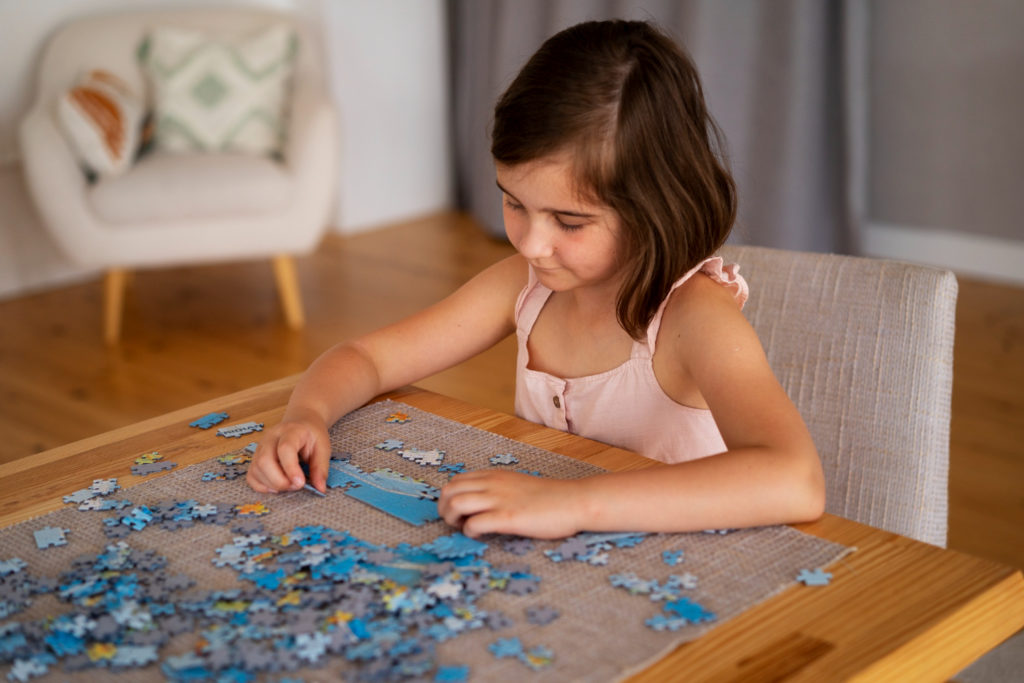
One of the best ways to help a child stay focused is through puzzles. They combine play and problem-solving, gently training patience and attention span. When a child sits down to complete a jigsaw puzzle, they practice observation, memory, and planning. The task provides visible progress and satisfaction once completed — reinforcing perseverance and confidence.
Digital tools like Kids Creative Puzzle make this process even more engaging. The app offers colourful puzzles that stimulate logical thinking and creativity while keeping the child’s focus naturally engaged. It’s a great way to train attention without stress, combining education with entertainment.
So, even if kids trouble focusing, puzzles and structured playtime can turn challenges into learning opportunities. With patience, understanding, and fun interactive tools, parents can nurture lasting concentration skills that benefit children in school and beyond.